
Taylor County Court Records After a Jail Arrest
After someone is arrested and booked into Taylor County Jail, the public record usually starts in two places. The jail roster is the custody record. The court record is the legal case record that follows once charges move through Magistrate Court, Superior Court, or another court with jurisdiction. Taylor County research shows that the roster can list a statute, charge description, warrant number, court, total bond, arresting agency, and days in jail, but those booking fields are not the final court docket.
The prosecutor side matters because Taylor County is in the Chattahoochee Judicial Circuit. The District Attorney represents the State in Superior Court criminal cases for the circuit, including Taylor County, and felony charges may later be filed by accusation or indictment. For custody details, use Taylor County jail inmate records. For booking-photo issues, use Taylor County jail mugshots. For filed charges, dispositions, hearing entries, and official copies, use the clerk and court channels below.
How to Find Taylor County Court Records After an Arrest
Start with the official Taylor County roster because it can provide the name spelling, arrest date, arresting agency, warrant number, statute, charge description, and listed court. Then move to the Taylor Clerk or Georgia court e-access channels. The Taylor Clerk website has a Case Search link, and the Georgia Courts e-access directory lists Taylor Superior with PeachCourt as the provider. Georgia Courts also states that users must have an account to search court records through the provider, so the online path is not the same as a free jail roster.
- Open the Taylor County jail roster and record the defendant's full name, arrest date, agency, statute, description, Warrant# field, and court field.
- Use the Taylor County Clerk of Court website or the clerk's case-search link to look for the defendant name or case-style number.
- Check the Georgia Courts e-access directory for Taylor Superior Court and PeachCourt access when a Superior Court case is expected.
- If the online provider requires an account, does not show the case, or does not include lower-court material, contact the Clerk of Superior Court or Magistrate Court directly.
The inspected roster showed MAGISTRATE COURT in a charge line, which is important but limited. Magistrate Court handles warrants, first appearance, bond issues, and some misdemeanor matters. A felony arrest can start there and later appear in Superior Court after the district attorney files or presents formal charges.
The Georgia court e-access directory shows the account-based route for online case records. See the Georgia Courts e-access directory before assuming a Taylor Superior case is searchable without registration.
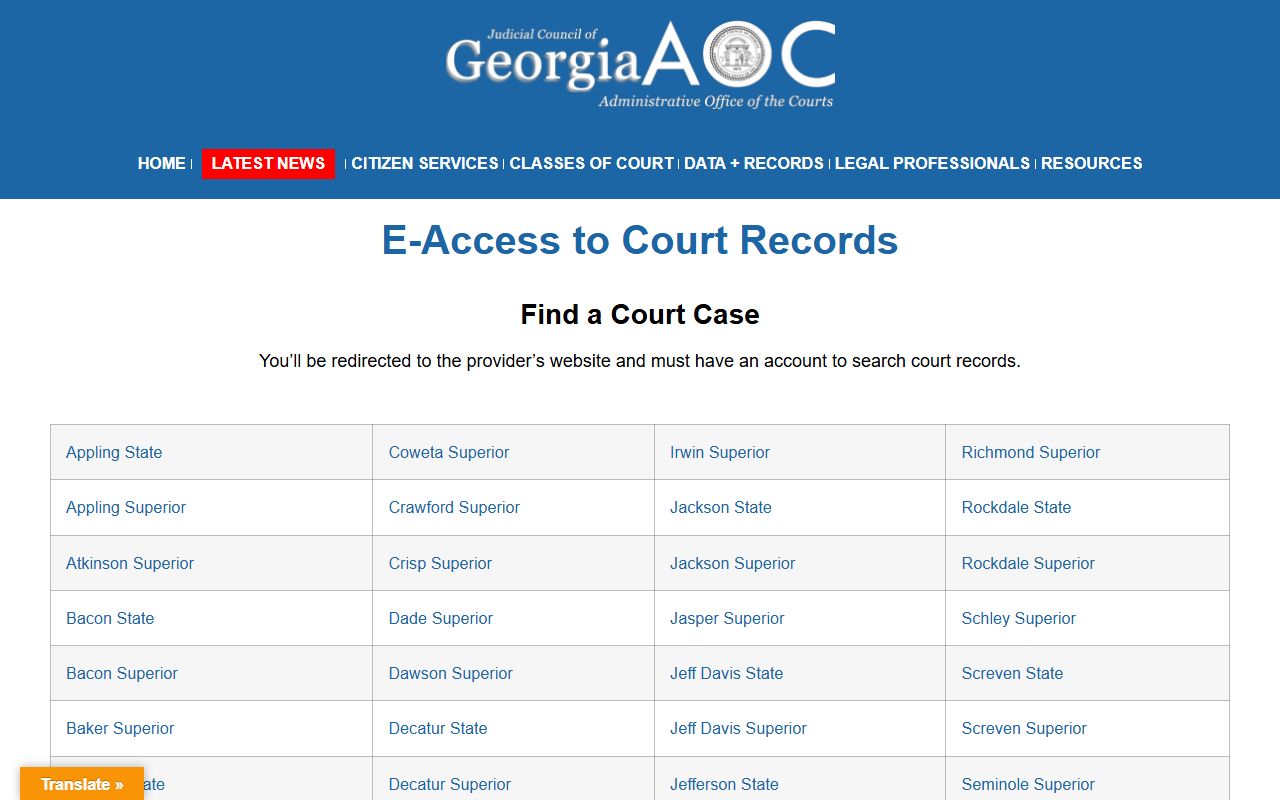
That account requirement is why the clerk contact remains a practical fallback for court records after an arrest, especially when a new booking has not yet matured into a searchable Superior Court case.
How Charges Get Filed After an Arrest
The arrest entry is created before the final court path is known. A person may be booked on an arrest warrant, a warrantless arrest, a municipal matter, or a charge entered by the arresting agency. Prosecutor review then determines what formal charges are pursued. In Taylor County, the Chattahoochee Judicial Circuit District Attorney handles Superior Court criminal prosecution for the State, while Magistrate Court handles criminal warrants, search warrants, first appearance, and bail where another court has not reserved that issue.
| Document or Stage | Who Uses It | What It Means After Arrest |
|---|---|---|
| Warrant or Complaint | Law enforcement, Magistrate Court, or prosecutor | Begins the arrest or lower-court charge path and may appear in the roster Warrant# or court field. |
| Accusation | Prosecutor | A prosecutor-filed charging document used in some Georgia criminal cases instead of indictment. |
| Indictment | Grand jury and District Attorney | A formal felony charging document filed in Superior Court after grand-jury action. |
| Docket Entry | Clerk of court | The court's event record for filings, hearings, bond orders, dispositions, and sentencing entries. |
A roster charge can be useful without being final. For example, research found a Taylor roster entry with statute 16-13-30(A), description "METHAMPHETAMINE- POSSESSION OF," Warrant# 2025-CR-501, and MAGISTRATE COURT as the listed court. That information can guide a clerk search, but the later court file may use a different case number or a more formal charge label.
Charge Status and What It Means
Court records after a Taylor County arrest can change more than once. Prosecutors may amend a charge, reduce it, dismiss it, add counts, or decline to proceed. The jail roster can lag behind the case docket, and the docket may not show up online until a filing is accepted by the clerk or the provider updates its index.
| Status | What It Means | Where to Confirm |
|---|---|---|
| Pending | The charge or case remains active and no final disposition has been entered. | Clerk case record or the court handling the matter. |
| Amended or Reduced | The filed charge changed after review, plea negotiation, or court order. | Clerk docket and prosecutor filings. |
| Dismissed | The charge was terminated by court or prosecutor action. | Disposition entry from the court clerk. |
| Nolle Prosequi | The prosecutor declines to pursue that charge, often called nolle prossed. | Formal disposition or prosecutor filing. |
| Conviction | A guilty plea, verdict, or other finding of guilt has been entered. | Court disposition, sentence order, and later GBI/GCIC records where applicable. |
Bond and First Appearance After an Arrest
Taylor County Court System states that Magistrate Court may grant bail in cases where bail is not exclusively reserved to a judge of another court. Georgia first-appearance timing under O.C.G.A. 17-4-26 generally requires a person arrested without a warrant to be brought before a judicial officer within 48 hours, and a person arrested with a warrant within 72 hours, unless bond is made earlier. Treat that as state procedure, not a posted Taylor County hearing calendar.
The public roster's Total Bond field can show a money amount or a status such as DENIED or NOT SET. Research also found a sample charge line with bond-revocation language. If the status is not clear, call Taylor County Jail at 478-862-5444 and ask for the total amount required for release today and whether any hold prevents release.
| Bond Type or Status | How It Works in Practice |
|---|---|
| Cash Bond | Money is posted directly with the jail or court if accepted for that charge and order. |
| Surety Bond | A licensed bonding company posts bond for a fee or collateral, if the court allows surety release. |
| Personal Recognizance | The person is released on a promise to appear and comply with court conditions. |
| Not Set | Bond has not been set or entered publicly yet, often before first appearance or after a new hold. |
| No Bond or Denied | The court or hold does not currently allow release on that charge or custody reason. |
Warrants That Lead to an Arrest
No official Taylor County Sheriff's Office active-warrant search, most-wanted list, or warrant PDF was located in the research. The Taylor jail roster can still show warrant-related information after an arrest because the charge grid includes a Warrant# column. Magistrate Court has jurisdiction over criminal warrants and search warrants, and the Taylor court page lists Magistrate Court at 478-862-3357.
Use the jail roster for a current booking, the clerk or Magistrate Court for court-issued warrant context, and the Sheriff's Office or jail phone for custody confirmation. Butler Police Department and Reynolds Police Department do not publish independent inmate rosters, and their arrestees can still appear through the Taylor County Jail custody channel when held there. Do not use a police crime-tip form to resolve a warrant. Active warrant situations can involve arrest, so contacting an attorney or the issuing court is the safer route.
Charges vs. Convictions
An arrest and a filed charge are not the same thing as a conviction. Court records after an arrest should be read by stage. The jail record may show an allegation, a warrant number, and bond status. The court record later shows whether that allegation was filed, changed, dismissed, nolle prossed, resolved by plea, or decided by trial.
| Charge | Conviction | |
|---|---|---|
| Stage | Accusation or allegation after arrest or filing | Final guilty plea, verdict, or finding |
| Legal Standard | Probable cause or prosecutor filing decision | Proof beyond a reasonable doubt or admitted plea |
| Can Change? | Yes, charges may be amended, reduced, or dismissed | Can be appealed, corrected, or restricted only through legal processes |
| Where Seen | Jail roster, warrant records, clerk docket | Disposition, sentence order, criminal-history record where reported |
Sealed or Restricted vs. Expunged Arrest Records
Georgia commonly uses the term record restriction rather than expungement for many criminal-history situations, while sealed court files are a related but separate access issue. Under O.C.G.A. 35-3-37, qualifying criminal-history information may be restricted from public criminal-history dissemination, but that is not the same as physically destroying every jail, court, or agency record. GBI explains that restricted records are not released for employment or licensing purposes, but they can remain available to judicial officials and criminal justice agencies.
| Sealed or Restricted | Expunged or Deleted | |
|---|---|---|
| Georgia usage | The main Georgia process for limiting public criminal-history release for eligible records. | Often used casually, but Georgia materials route many cases to record restriction. |
| Public visibility | Limited in public criminal-history checks if approved and processed. | May imply destruction in other states, but do not assume that outcome for Georgia records. |
| Agency access | Criminal justice and judicial access may remain. | Depends on the specific law and order, if any applies. |
| Where to start | GBI/GCIC restriction instructions and the court disposition. | Ask the court or counsel whether any Georgia remedy beyond restriction applies. |
GBI's record-restriction page is the relevant statewide source for this topic. Review the GBI criminal-history record restrictions page before assuming a dismissal will vanish automatically from every public or private source.
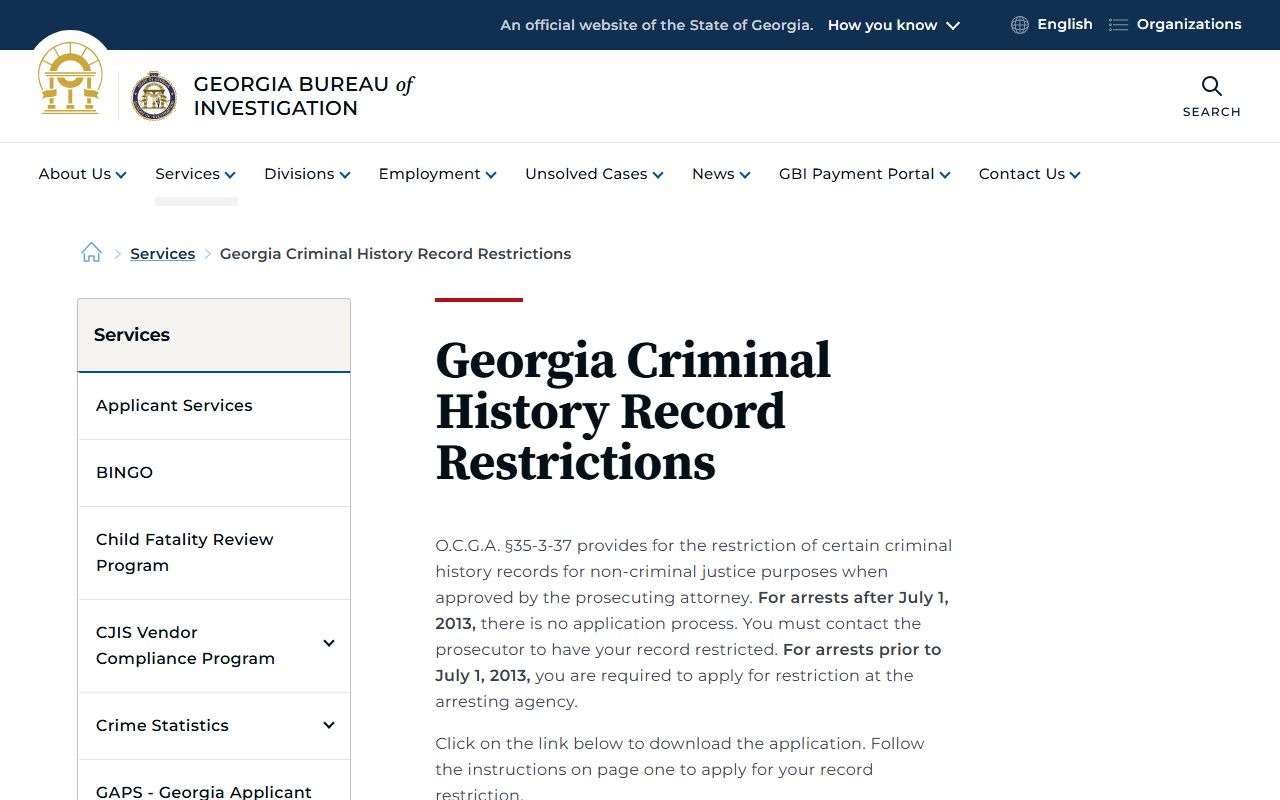
The GBI route applies to Georgia criminal-history restriction, while the Taylor Clerk remains the office to contact for official court-record copies and court-file status.
GBI, GCIC, and Background Check Limits
GBI provides Georgia criminal-history information and record-restriction guidance. The GCIC fee schedule effective January 1, 2025 lists a Georgia-only check at $30.00 plus a GAPS fee of $39.99 for employment, licensing, adoption, immigration, and other non-criminal justice purposes. The same schedule lists a Georgia/FBI check at $42.00 plus a GAPS fee of $51.99, and record restrictions at $25.00. Those are statewide criminal-history channels, not Taylor County court docket searches.
Important: Taylor County Inmate Population is not a consumer reporting agency and may not be used for employment, tenant screening, credit, insurance, or any FCRA-regulated purpose.
Court and Clerk Contacts for Taylor County Arrest Records
Taylor County court records are maintained by the court or clerk that created them, not by the jail. The courthouse is at 2 North Broad Street in Butler. The clerk website identifies Lisa D. Akey as Superior and Juvenile Clerk, with mailing address 2 N Broad Street, PO Box 248, Butler, GA 31006-0248, phone 478-862-5594, and fax 478-862-5334. The county court page also lists criminal and civil records contact Denise Trower at Denise.Trower@gsccca.org.
| Office | Use It For | Contact |
|---|---|---|
| Clerk of Superior Court | Superior Court criminal case records, filings, dispositions, and official copies. | 2 N Broad Street, Butler, GA 31006; 478-862-5594. |
| Magistrate Court | First appearance, warrants, bond matters, certain misdemeanors, ordinances, and bad-check matters. | 478-862-3357. |
| Probate Court | Traffic court for citations out of city jurisdiction and in the county, plus probate functions. | 478-862-3357. |
| Chattahoochee Judicial Circuit District Attorney | Prosecution of Superior Court criminal cases for Taylor County. | Government Center, 100 10th Street, Columbus, GA 31901; 706-653-4336. |
| Taylor County Jail | Current custody, bond status, booking record, and jail records request routing. | 5 North Ivy Street, Butler, GA 31006; 478-862-5444. |
The Taylor Clerk website is the local starting point for court search navigation. Use the Taylor County Clerk of Court homepage when you need the clerk's contact details or case-search link.
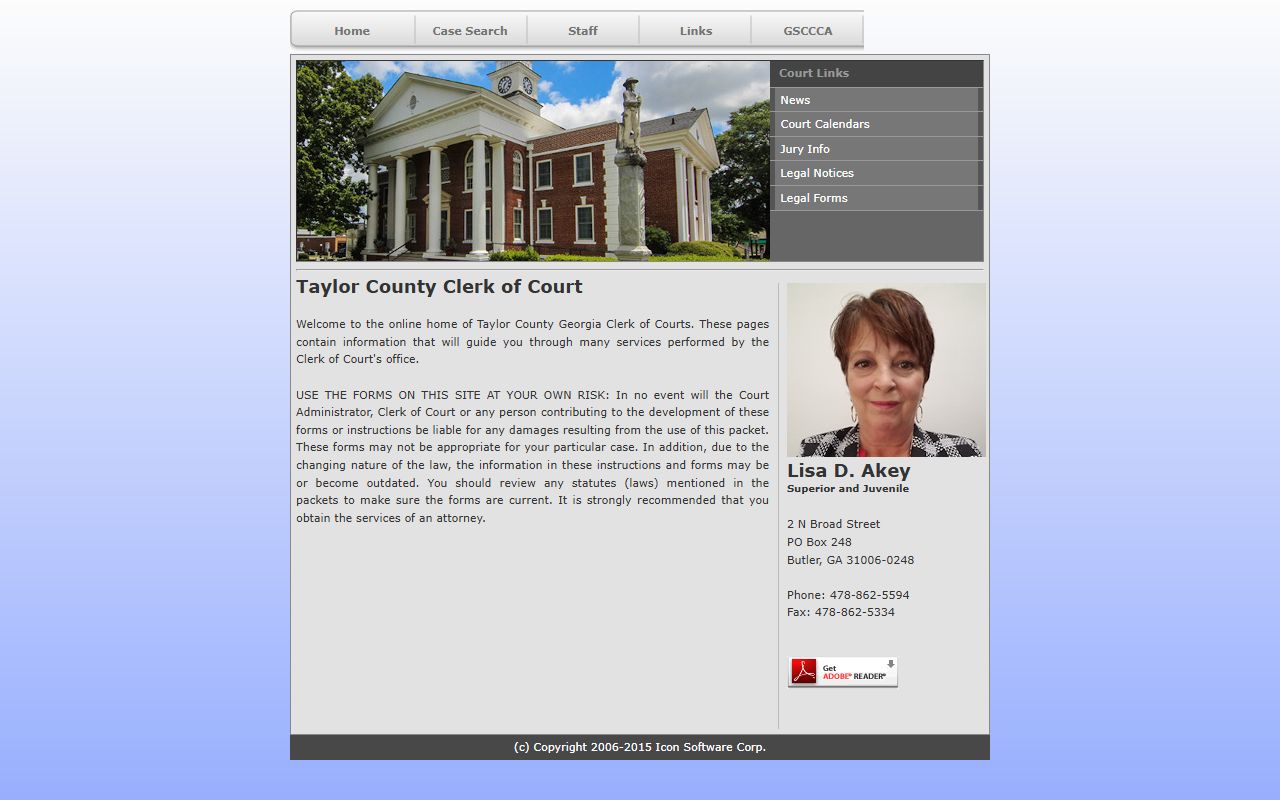
Because Taylor's online systems may separate jail records, lower-court events, and Superior Court case records, using the clerk and Magistrate Court contacts together can prevent a false no-record result.
Restricted Court Records After an Arrest in Taylor County
Georgia's Open Records Act supports access to public records, but it is not unlimited. Jail, court, and prosecutor records can include juvenile information, victim data, medical information, active investigative material, security-sensitive details, sealed court filings, and restricted criminal-history data. The Taylor roster itself shows one practical redaction: the address field was present, but the public value was REDACTED in inspected current-inmate entries.
For a record that is not online, make a Georgia Open Records Act request to the office that maintains it. Ask for a specific record, such as a booking sheet, charge and bond entry, arrest report, jail log entry, court disposition, or docket copy. Under O.C.G.A. 50-18-71, agencies can apply copying, redaction, and cost procedures. For court records after arrest, the clerk is the official custodian of the court file. For jail booking records, the Sheriff's Office is the practical starting point.